Home Insurance in St. Petersburg, FL: What Homeowners Need to Know
Home insurance in St. Petersburg, Florida: what every homeowner should know
If you own a home in St. Petersburg, finding the right home insurance in St. Petersburg, Florida is not a simple box to check. Between hurricane exposure, flood zones, aging roof policies, and a property insurance market that has seen more carrier exits than most states, St. Pete homeowners are dealing with one of the most complex coverage situations in the country. This post covers what you are buying, what you might be missing, and how to keep costs as reasonable as possible.
Why home insurance in St. Petersburg is different from most of Florida
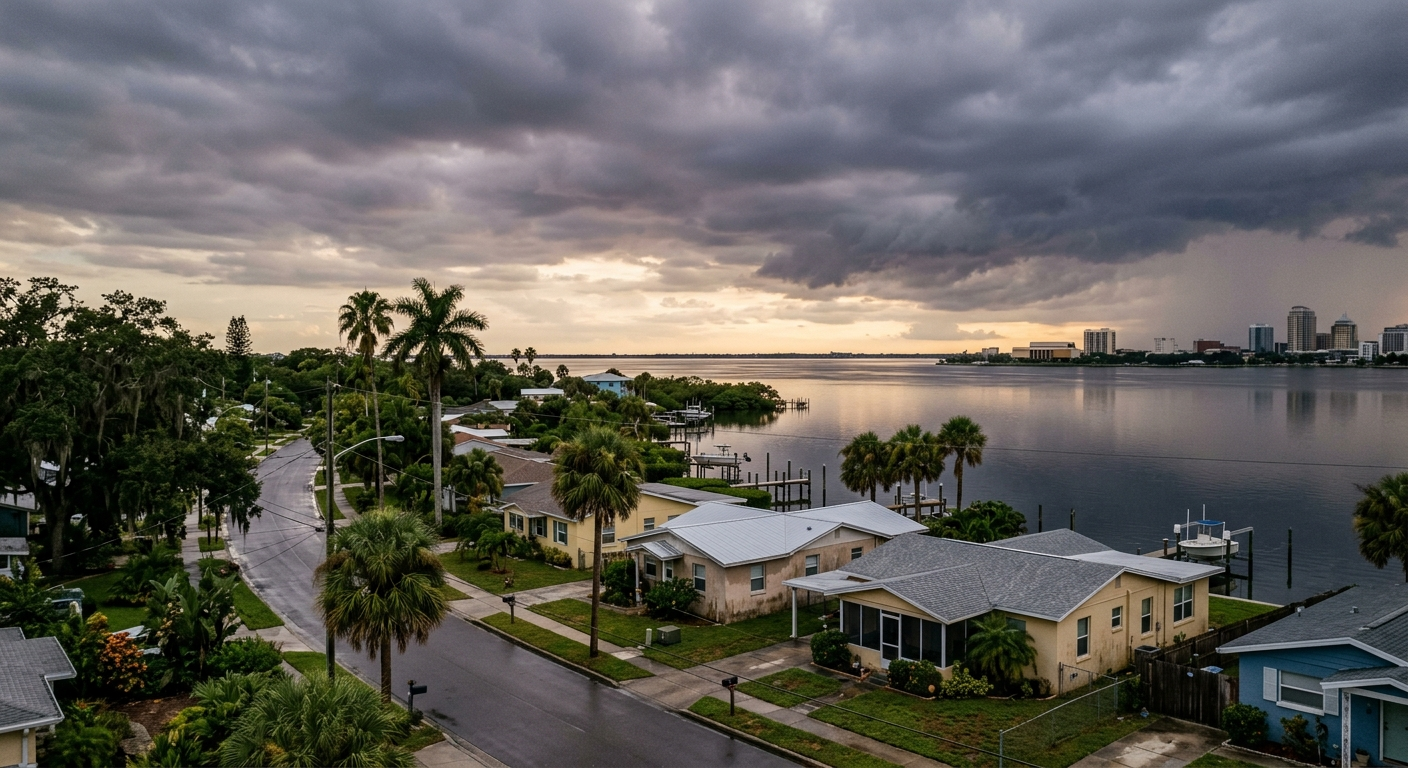
St. Petersburg sits on a peninsula bordered by Tampa Bay to the east and the Gulf of Mexico to the west. That geography creates a layered risk profile that not every homeowner fully understands until a claim comes in.
- Hurricane and tropical storm exposure: Pinellas County is a peninsula with limited evacuation routes, and storm surge from a direct Gulf hit can push water several miles inland across flat terrain.
- Flood zone complexity: Large portions of St. Pete fall inside FEMA Special Flood Hazard Areas (Zone AE or VE). Even homes outside those zones have flooded after heavy rain events. Your homeowners policy does not cover flood, period.
- Aging housing stock: Many St. Petersburg neighborhoods, from Historic Kenwood to Snell Isle, have homes built in the 1940s through 1970s. Older electrical systems, plumbing, and roof materials can trigger surcharges or coverage restrictions with many carriers.
- Roof age rules: Several Florida insurers will not write or renew a policy on a roof older than 15 years, or they shift the roof to actual cash value rather than replacement cost, which can leave you with a significant out-of-pocket gap after a loss.
Understanding these factors before you shop means you will not be surprised when a carrier declines, restricts, or prices your coverage far above what a homeowner in another part of the state pays.
What a standard homeowners policy covers in Florida
A standard HO-3 homeowners policy in Florida provides several layers of protection. Knowing what each layer does helps you spot a gap before a loss, not after.
Dwelling coverage (Coverage A)
This pays to rebuild or repair the structure of your home after a covered loss. In St. Petersburg, construction costs have climbed sharply since 2020. Make sure your Coverage A limit reflects the actual cost to rebuild today , not the market value or purchase price of the home. Those numbers are often very different, and underinsurance is one of the most common problems after major storms.
Other structures (Coverage B)
Fences, detached garages, sheds, and screened enclosures fall under this coverage, typically at 10% of your dwelling limit. If you have an expensive detached garage or a large lanai, confirm the limit is adequate.
Personal property (Coverage C)
Your furniture, electronics, clothing, and personal belongings are covered, usually at 50-70% of the dwelling limit. High-value items like jewelry, art, or collectibles often have sublimits of $1,000 to $2,500 under a standard policy. A personal articles floater can schedule those items separately for their full appraised value.
Loss of use (Coverage D)
If a covered loss makes your home uninhabitable, this pays for temporary housing and additional living expenses while repairs are underway. After a major hurricane, hotel inventory in the Tampa Bay area disappears quickly. Make sure this limit is meaningful, not a token amount.
Liability and medical payments (Coverages E and F)
If someone is injured on your property or you accidentally damage a neighbor's property, liability coverage protects your assets. Standard limits start at $100,000, but most independent agents recommend at least $300,000 to $500,000. A personal umbrella policy can extend that to $1 million or more at a relatively low additional cost.
Hurricane coverage and the deductible reality
Florida homeowners policies do cover wind damage from hurricanes. What surprises many St. Petersburg homeowners is how the hurricane deductible actually works.
Rather than a flat dollar amount, most Florida policies use a percentage-based hurricane deductible, commonly 2% or 5% of the dwelling coverage limit. On a home insured for $400,000, a 2% hurricane deductible means you pay the first $8,000 out of pocket before the policy pays anything. At 5%, that is $20,000. This deductible applies any time a named storm triggers the clause, regardless of whether the eye passes directly over St. Pete.
For a closer look at how these deductibles work in practice, our post on hurricane deductibles in Florida walks through the mechanics with real examples.
One of the most effective ways to reduce your premium and sometimes lower your hurricane deductible tier is a wind mitigation inspection . A licensed inspector evaluates your roof shape, roof deck attachment, opening protection (shutters or impact glass), and other factors. The resulting credits can cut your wind premium by 20% to 40% in some cases. If you have not had one done, it is usually worth the $150 to $200 inspection fee.
Flood insurance for St. Petersburg homeowners
This is the coverage that catches homeowners off guard more than any other. Homeowners insurance does not cover flood damage. Not an inch of it. If water enters your home because a storm surge pushed Bay water across your yard, or because Boca Ciega Bay overflowed during a slow-moving tropical system, your home insurance claim will be denied for that damage.
In St. Petersburg, a significant share of residential properties fall inside FEMA-designated flood zones. If you have a federally backed mortgage and your home is in a Special Flood Hazard Area, flood insurance is legally required. But even homeowners outside the mandatory purchase zone face real flood risk given how flat and low-lying much of Pinellas County is.
You have two main options for flood coverage:
- NFIP (National Flood Insurance Program): Administered through FEMA and sold through private agents, NFIP policies cap building coverage at $250,000 and contents at $100,000. Premiums are now set under the Risk Rating 2.0 system, which prices policies based on the specific property rather than a blanket zone rate.
- Private flood insurance: Private carriers can often offer higher limits and broader coverage. Loss of use, for example, is rarely included in NFIP policies but is common in private ones. Premiums may also be lower depending on your property's risk profile.
Our guide on NFIP vs. private flood insurance in Florida compares both options in detail if you want more information before deciding.
What drives home insurance costs in St. Petersburg
Premiums for home insurance in St. Petersburg, Florida vary widely based on property-specific factors. Here is what carriers weigh most heavily:
- Roof age and material: A newer architectural shingle or metal roof earns lower premiums. An older flat or three-tab shingle roof raises them or triggers actual cash value limitations.
- Distance to coast and elevation: Homes closer to the Gulf or Tampa Bay, or at lower elevations, carry higher wind and flood risk and are priced accordingly.
- Construction type: Concrete block (CBS) construction typically gets better rates than wood frame in Florida because of its wind resistance.
- Wind mitigation credits: Documented hurricane-resistant features translate directly into premium savings.
- Claims history: Both your personal claims history and the property's prior claims history affect pricing. Water damage claims in particular can trigger surcharges.
- Coverage limits and deductibles: Choosing higher deductibles (including the hurricane deductible) lowers the premium but increases out-of-pocket exposure in a loss.
- Carrier and market availability: Florida's market is genuinely stressed. Several national carriers have limited or stopped writing new policies in the state. Working with an independent agent who can access multiple carriers matters more here than in most states.
For a broader look at cost factors across the Tampa Bay area, our post on what drives home insurance costs in Tampa covers additional details relevant to nearby communities.
Common coverage mistakes St. Petersburg homeowners make
Even experienced homeowners make these errors, and they tend to surface at the worst possible time.
- Insuring to market value instead of replacement cost: The real estate value of your home includes the land, which cannot burn down or blow away. Rebuild cost is what matters, and in St. Pete's current construction market it is often higher than the purchase price.
- Skipping flood insurance because "we've never flooded": Tropical Storm Eta in 2020 and Hurricane Irma in 2017 put water in homes across Pinellas County that had no prior flood history. Past experience is not a reliable guide to future risk.
- Not updating coverage after renovations: A kitchen remodel or bathroom update increases your home's rebuild cost. If you do not notify your insurer, your Coverage A limit may fall short when you need it.
- Assuming all water damage is covered: Sudden pipe bursts are typically covered. Slow leaks from a failing toilet seal that went unnoticed for months often are not. Carriers look for evidence of long-term neglect when investigating water claims.
- Accepting renewal without shopping: Florida's market shifts constantly. A policy that was competitive 18 months ago may now have better alternatives. Reviewing at renewal can yield real savings.
For a broader list of coverage pitfalls specific to Florida families, see our post on 5 common insurance mistakes Florida families make.
How to choose the right insurer in a difficult market
Florida's home insurance market is not like other states. Since 2019, more than a dozen carriers have become insolvent, non-renewed hundreds of thousands of policies, or stopped writing new business in Florida entirely. This makes carrier selection more than a price exercise.
When evaluating a policy, consider:
- AM Best financial strength rating: Look for carriers rated A- or better. A lower-rated or unrated carrier may offer lower premiums, but financial stability matters when a major storm generates thousands of simultaneous claims.
- Claims handling reputation: Ask how claims are handled and whether the carrier uses in-house adjusters or third-party firms. Post-storm claims delays have been a documented problem with some Florida domestic carriers.
- Policy form details: Not all HO-3 policies are identical. Exclusions, sublimits, and endorsement availability vary significantly between carriers. A cheap policy with significant exclusions is not a good deal.
- Citizens Insurance as a last resort: Florida's insurer of last resort, Citizens Property Insurance, may be the only option for some St. Pete properties. If you are in Citizens, be aware that depopulation programs have moved many policies to takeout carriers. Understanding your options if that happens is worth your time.
Get the right home insurance coverage for your St. Petersburg home
At Tampa Bay Insurance, we are an independent agency, which means we compare rates and coverage across multiple carriers to find the policy that fits your home and your budget. We are not tied to any single company, so our only job is finding the right fit for you.
Whether you own a historic bungalow in Old Northeast, a newer construction home near Weedon Island, or a condo along the waterfront, we work with homeowners across St. Petersburg and the surrounding St. Petersburg area every day. We know the local market, the flood zone nuances, and the carrier options available right now.
Ready to review your current coverage or get a fresh quote? Call us at (727) 372-5559 or get a quote online and one of our agents will walk you through your options without pressure.
Get A Quote
At Tampa Bay Insurance, securing your future is easy. Ready to protect what matters? Contact us for a quick quote and personalized insurance options!
Kelly
Speak to Kelly 24/7
Microphone ready
Start your custom insurance quote
Instant answers to your insurance questions
Schedule appointments or follow-ups
Personal Insurance
From auto and homeowners to renters and umbrella policies, we help protect your family and property. Let’s find coverage that fits your life.
Commercial Insurance
We customize policies for your industry's risks, like general liability and workers' comp, ensuring you can run your business worry-free.
Contact Tampa Bay Insurance
Recent Posts