Why Home Insurance in Tampa Costs What It Does and How to Pay Less
What drives home insurance Tampa cost factors higher than most of the country
If you've recently shopped for home insurance in Tampa and felt sticker shock, you're not alone. Florida homeowners pay some of the highest premiums in the United States, and Tampa sits squarely in the middle of that problem. The average Florida homeowner now pays well over $3,000 per year for coverage, while the national average hovers around $1,800. Understanding the home insurance Tampa cost factors that drive your specific premium is the first step toward finding real savings without sacrificing real protection.
Hurricane and windstorm exposure: the biggest driver
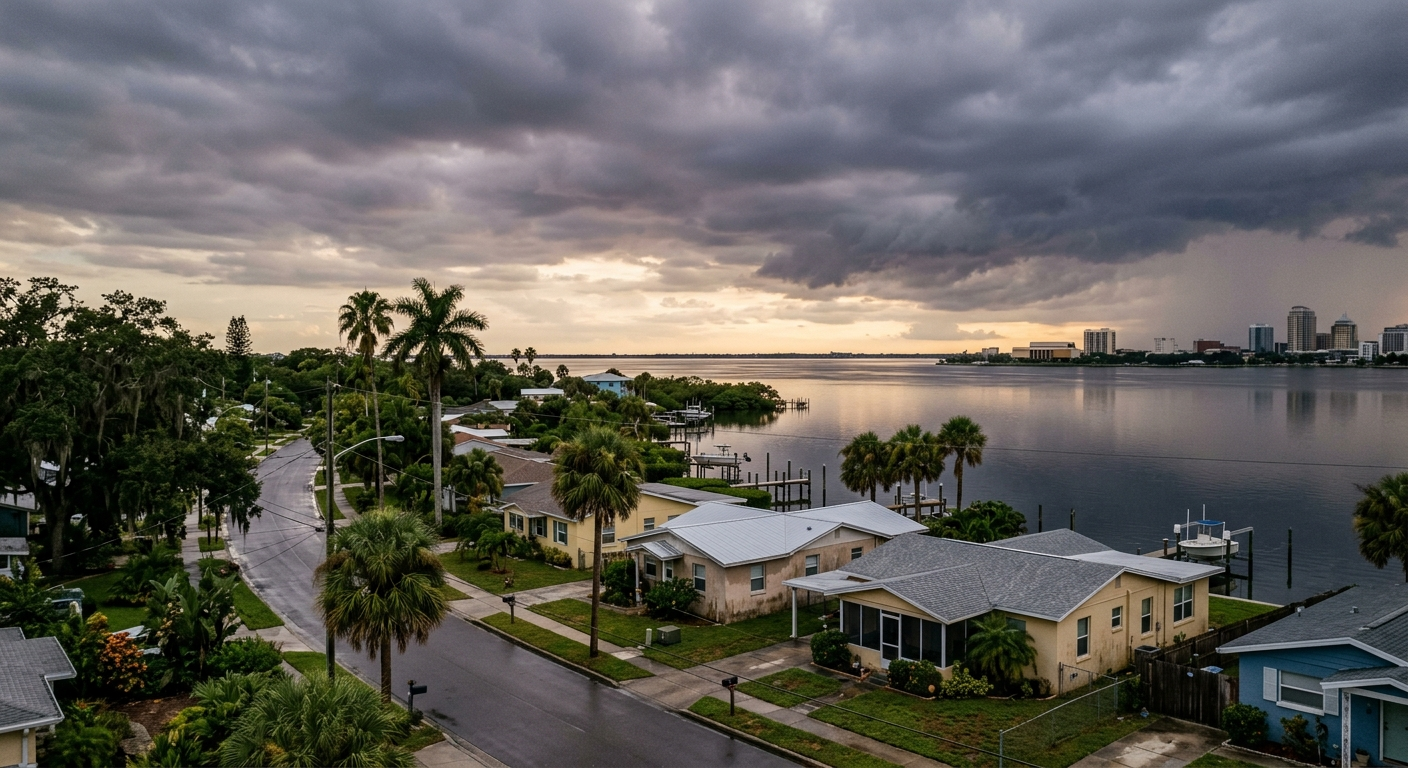
Tampa Bay sits at the top of a shallow, bowl-shaped bay on the Gulf of Mexico. That geography makes the area particularly vulnerable to storm surge and high winds when a hurricane tracks up the coast. Insurers model this risk using catastrophe models that assign Tampa a high probability of significant loss over a 20-to-50-year horizon. Wind coverage alone can represent 50 percent or more of your total premium.
Your home's construction year matters here. Homes built before 2002 were constructed under older building codes that did not require the wind-resistant standards Florida mandates today. Insurers know older homes are more likely to sustain serious wind damage, and they price accordingly.
One of the most reliable ways to push back on wind costs is a wind mitigation inspection . A licensed inspector evaluates your roof shape, roof deck attachment, roof covering, opening protections, and other features. A strong inspection report can cut your wind premium by 20 to 40 percent in some cases. For a closer look at how this works, see our post on how wind mitigation lowers Florida home insurance costs.
It's also worth understanding how your hurricane deductible works before a storm arrives. Unlike a standard flat deductible, Florida's hurricane deductible is calculated as a percentage of your home's insured value, typically 2 percent or 5 percent. On a $400,000 home, a 2 percent deductible means you absorb the first $8,000 in losses before insurance pays anything. Our breakdown of hurricane deductibles explains exactly how that calculation works and why it surprises so many homeowners.
Flood risk and what your homeowners policy does not cover
Standard homeowners insurance does not cover flood damage, full stop. In Tampa Bay, that gap matters enormously. Much of Hillsborough and Pinellas County falls within FEMA-designated Special Flood Hazard Areas, and even homes outside those zones flood regularly during heavy rain events and tropical systems. If your home is in a high-risk flood zone, your mortgage lender likely requires a separate flood policy.
Flood insurance in Florida is available through the National Flood Insurance Program (NFIP) and through a growing number of private flood carriers. NFIP rates are based on your property's flood zone, elevation, foundation type, and the amount of coverage you choose. A home elevated well above base flood elevation can qualify for substantially lower premiums than a slab-on-grade home at or below base flood elevation.
Private flood insurance has become a real option for many Tampa homeowners and can offer broader coverage limits and faster claims settlements than the NFIP. If you're not sure whether you have adequate flood protection, our guide on water damage vs. flood coverage explains exactly what each policy does and doesn't pay for.
Property characteristics that affect your rate
Beyond location and storm exposure, insurers look closely at the physical details of your home when pricing a policy. Several of these are within your control, either at purchase or through improvements.
- Roof age and material: This is the single biggest property-level factor in Florida. Most carriers will not write a new policy on a roof older than 15 years, and some draw the line at 10. A new architectural shingle or metal roof not only keeps your home insurable but can qualify you for meaningful discounts.
- Construction type: Concrete block (CBS) construction is more resistant to wind damage than wood frame, and insurers price that difference into your premium. Most Tampa homes built after the 1970s are CBS, but older bungalows in neighborhoods like Seminole Heights or South Tampa may be wood frame.
- Square footage and replacement cost: Insurers cover the cost to rebuild, not the market value of your home. In today's market, construction costs in Hillsborough County run $200 to $300 per square foot or more for standard residential construction. A 2,000-square-foot home could have a replacement cost between $400,000 and $600,000, and your coverage needs to reflect that.
- Claims history: Florida uses the CLUE (Comprehensive Loss Underwriting Exchange) database to track prior claims on both the property and the policyholder. Multiple claims in recent years, particularly water damage claims, can make a home harder to insure and push up the cost.
- Home systems: Older electrical panels (Federal Pacific, Zinsco, and knob-and-tube wiring), galvanized plumbing, and polybutylene pipes are red flags for insurers. Updating these systems reduces your risk of a claim and often expands the number of carriers willing to offer you coverage.
The Florida insurance market and how it affects your options
Florida's home insurance market is genuinely different from every other state. A wave of insurer insolvencies, fraud-driven litigation, and catastrophic losses from Hurricanes Ian, Idalia, and others has led many national carriers to reduce or eliminate their Florida books of business. The result is fewer choices, higher prices, and more homeowners landing on Citizens Property Insurance Corporation , the state-backed insurer of last resort.
Citizens has been actively moving policies to private carriers through a process called depopulation. If you've received a notice that your Citizens policy is being assumed by a private carrier, the implications for your coverage and premium can be significant. Our post on Citizens depopulation and what it means for Florida homeowners walks through exactly what to expect.
The Florida legislature passed meaningful reforms in 2022 and 2023 aimed at reducing litigation costs and stabilizing the market. A handful of new carriers have entered the state since then, and independent agents are starting to see more competitive options emerge for well-built, well-maintained homes.
This is why working with an independent insurance agent matters so much in Florida. A captive agent represents one company. An independent agent like Tampa Bay Insurance can compare rates and coverage terms across dozens of admitted and surplus lines carriers to find the best fit for your specific home and risk profile.
Discounts and strategies to reduce what you pay
Even in a tough market, there are real ways to lower your home insurance costs in Tampa. The ones below actually move the needle.
- Wind mitigation inspection: This is the highest-return move available to most Tampa homeowners. An inspection costs $150 to $300, and the savings can persist for years.
- New or newer roof: Replacing an aging roof before it hits the carrier's cutoff age keeps you insurable and often qualifies you for a significant discount. The math usually works in your favor over a 5-to-7-year window.
- Hurricane shutters or impact windows: Properly installed impact-rated opening protections score favorably on wind mitigation reports and reduce the probability of a loss, which carriers reward with lower premiums.
- Security systems and smart home devices: Central station monitoring, water leak detection sensors, and smart smoke detectors earn discounts from many carriers, often in the 2 to 5 percent range each.
- Higher deductibles: Choosing a higher non-hurricane deductible (say, $2,500 instead of $1,000) lowers your base premium. This makes sense if you have the savings to cover a mid-sized loss without strain. Be careful applying the same logic to your hurricane deductible, where the dollar amounts get very large very quickly.
- Bundle your policies: Combining home and auto insurance with the same carrier typically earns a 5 to 15 percent discount on both policies. It's one of the easiest savings available.
- Shop the market regularly: The Florida market is shifting fast. A rate that was competitive 18 months ago may not be today, and new carriers entering the market may offer better terms for your home. An annual review with your agent is a sound habit.
How your coverage choices shape the premium
Not all of your premium is determined by external factors. The coverage decisions you make at the time of purchase also have a real impact on what you pay and, more importantly, on what you receive when you file a claim.
Replacement cost vs. actual cash value (ACV) is the most important coverage choice on your dwelling. Replacement cost pays what it costs to rebuild using current materials and labor prices. ACV deducts depreciation, which means a 15-year-old roof worth $5,000 in ACV terms might cost $20,000 to replace. In Florida, replacement cost coverage for the dwelling is strongly recommended.
Personal property coverage works similarly. ACV personal property coverage pays the depreciated value of your belongings. Replacement cost personal property coverage pays what it costs to buy equivalent new items. The premium difference is usually modest; the claims difference can be enormous.
Liability coverage is often underestimated. The standard $100,000 limit in many base policies is thin protection if someone is seriously injured on your property. Bumping to $300,000 or $500,000 is typically inexpensive, and adding a personal umbrella policy on top can extend that protection to $1 million or more for a few hundred dollars per year.
Florida homeowners should also pay attention to loss assessment coverage if they live in a community with a homeowners association. If the HOA's master policy comes up short after a major storm, individual unit owners can face large special assessments. Loss assessment coverage on your personal policy helps absorb that cost.
Get the right coverage for your Tampa home
Home insurance Tampa cost factors are complex, but they're not mysterious. Hurricane exposure, flood risk, roof age, construction type, the state of Florida's insurance market, and the coverage choices you make all combine to produce the number on your declaration page. The more you understand each piece, the better positioned you are to make sound decisions.
At Tampa Bay Insurance , we're an independent agency, which means we shop your home across multiple carriers rather than steering you toward a single company's products. Whether your home is in South Tampa, Clearwater, St. Petersburg, or anywhere else across the Tampa Bay area, we compare options side by side to find coverage that fits your home, your risk, and your budget.
Ready to see what the market looks like for your specific property? Call us at (727) 372-5559 or get a personalized quote online. It takes a few minutes and could save you hundreds of dollars per year.
Get A Quote
At Tampa Bay Insurance, securing your future is easy. Ready to protect what matters? Contact us for a quick quote and personalized insurance options!
Kelly
Speak to Kelly 24/7
Microphone ready
Start your custom insurance quote
Instant answers to your insurance questions
Schedule appointments or follow-ups
Personal Insurance
From auto and homeowners to renters and umbrella policies, we help protect your family and property. Let’s find coverage that fits your life.
Commercial Insurance
We customize policies for your industry's risks, like general liability and workers' comp, ensuring you can run your business worry-free.
Contact Tampa Bay Insurance
Recent Posts