Motorcycle Insurance in Florida: A Tampa Bay Seasonal Rider's Guide
Motorcycle insurance in Florida for seasonal riders: what you actually need to know
Florida is one of the best states in the country for motorcycle riders, and Tampa Bay makes that clear every day. Warm winters, dry stretches that run from October through May, and roads like the Courtney Campbell Causeway or US-19 through Pinellas County give riders here mileage that most northern states cannot match. That riding advantage creates a coverage question many local riders get wrong: if you only ride part of the year, what does motorcycle insurance in Florida for seasonal riders actually look like, and can you drop or pause coverage between rides?
The answer is more complicated than most people expect. Florida law, lender requirements, and the real cost of a coverage gap all point the same direction: keeping your policy active year-round is almost always the smarter financial move, even if the bike sits in the garage from June through September during hurricane season.
What Florida law requires for motorcycle insurance
Florida does not require motorcyclists to carry Personal Injury Protection (PIP) or property damage liability the way it requires car owners to. This surprises a lot of riders. Under Florida Statute 627.733, the mandatory no-fault system that applies to motor vehicles specifically excludes motorcycles. Technically, Florida does not mandate any minimum liability insurance for a registered motorcycle.
That said, "not required" is not the same as "not needed." If you cause an accident and injure someone, you are personally liable for every dollar of their medical bills, lost wages, and pain and suffering. Florida is a tort state for motorcycle accidents, meaning injured parties can sue you directly. Riders who skip liability coverage are gambling with their savings, their home equity, and their future income.
There is also a practical registration consideration. While Florida does not require proof of motorcycle insurance to register a bike, if you financed the motorcycle through a lender or dealer, your loan agreement almost certainly requires you to carry collision and comprehensive coverage for the life of the loan. Canceling that coverage mid-term can trigger a force-placed insurance policy from your lender, which costs significantly more and protects the lender, not you.
The seasonal rider trap: why pausing coverage backfires
Seasonal riders in the Tampa Bay area often think about dropping their motorcycle policy during the hottest and stormiest summer months and reinstating it when the weather cools in October. On paper, it looks like a way to save a few dollars. In practice, it creates three real problems.
- Comprehensive losses do not stop because you stopped riding. Hurricanes, tropical storms, flooding, theft, and fire can all damage a parked motorcycle. Tampa Bay sits in one of the most active hurricane corridors in the country. If you let your comprehensive coverage lapse and a storm sends a tree through your garage, you are paying out of pocket.
- A coverage gap raises your rate. Insurers look at continuous coverage history when pricing your next policy. Even a 60-day lapse can push you into a higher rating tier, meaning the money you saved by pausing coverage could easily be wiped out by the higher premium you pay when you reinstate.
- Reinstating is not always instant. Some carriers require a new application, a waiting period, or an inspection before restoring full coverage. If you reinstated your policy on a Monday and your bike was stolen on Saturday, you might still be in an exclusion window.
A better approach for true seasonal riders: ask your agent about reducing coverage to comprehensive-only during the months the bike is stored. You drop collision (since the bike is not on the road), keep protection against theft and weather damage, and maintain continuous coverage so your history stays clean. Many carriers support this, the premium reduction is real, and the gap risk is eliminated.
Coverage types every Tampa Bay motorcycle rider should understand
Motorcycle policies are built from several distinct coverage components. Knowing what each one does helps you build a policy that matches how you actually ride in Florida.
Liability coverage
This pays for injuries and property damage you cause to other people. Even though Florida does not legally require it for motorcycles, it is the most important coverage you can carry. A serious accident on I-275 or the Howard Frankland Bridge can generate six-figure medical claims quickly. Minimum recommended limits for most Tampa Bay riders are $100,000 per person / $300,000 per occurrence for bodily injury, plus $100,000 for property damage. If you have assets worth protecting, talk to your agent about a personal umbrella policy that sits on top of your motorcycle liability.
Uninsured and underinsured motorist coverage (UM/UIM)
Florida consistently ranks among the states with the highest rates of uninsured drivers. If an uninsured driver runs a red light and hits you, your UM coverage pays your medical bills. This coverage is especially valuable for motorcyclists because injury severity tends to be high and your exposure to uninsured drivers on Tampa Bay roads is real. Do not waive it to save a few dollars per month.
Collision coverage
Collision pays for damage to your motorcycle from a crash, regardless of fault. If you financed the bike, your lender almost certainly requires it. If you own the bike outright, the decision comes down to the bike's value versus your ability to absorb a repair or replacement cost on your own.
Comprehensive coverage
Comprehensive protects you when the bike is parked. Theft, vandalism, fire, flooding, and storm damage all fall under this coverage. In the Tampa Bay area, where tropical storms can push floodwaters into garages and hurricane debris can cause serious damage, comprehensive is not optional for most riders.
Medical payments coverage (MedPay)
Because motorcycles are excluded from Florida's PIP system, you have no automatic no-fault medical coverage after a crash. MedPay fills that gap. It pays your medical expenses regardless of fault, quickly and without waiting for a liability determination. For riders without robust health insurance, MedPay is a relatively inexpensive add-on that matters a great deal after a crash.
Roadside assistance and accessories coverage
Many riders invest significantly in custom accessories, upgraded exhausts, saddlebags, or specialty gear. A standard policy may only cover the base value of the motorcycle as manufactured. If you have added aftermarket parts, make sure your policy specifically covers them, or those upgrades could be excluded after a loss.
How Florida's riding seasons affect your coverage decisions
Tampa Bay's climate divides the year into two distinct riding windows. From roughly November through April, the weather is close to ideal: low humidity, temperatures in the 60s and 70s, and relatively dry roads. This is also when snowbirds arrive, tourist traffic increases, and roads around Clearwater Beach, Dunedin, and St. Petersburg fill up with unfamiliar drivers who are not used to local traffic patterns.
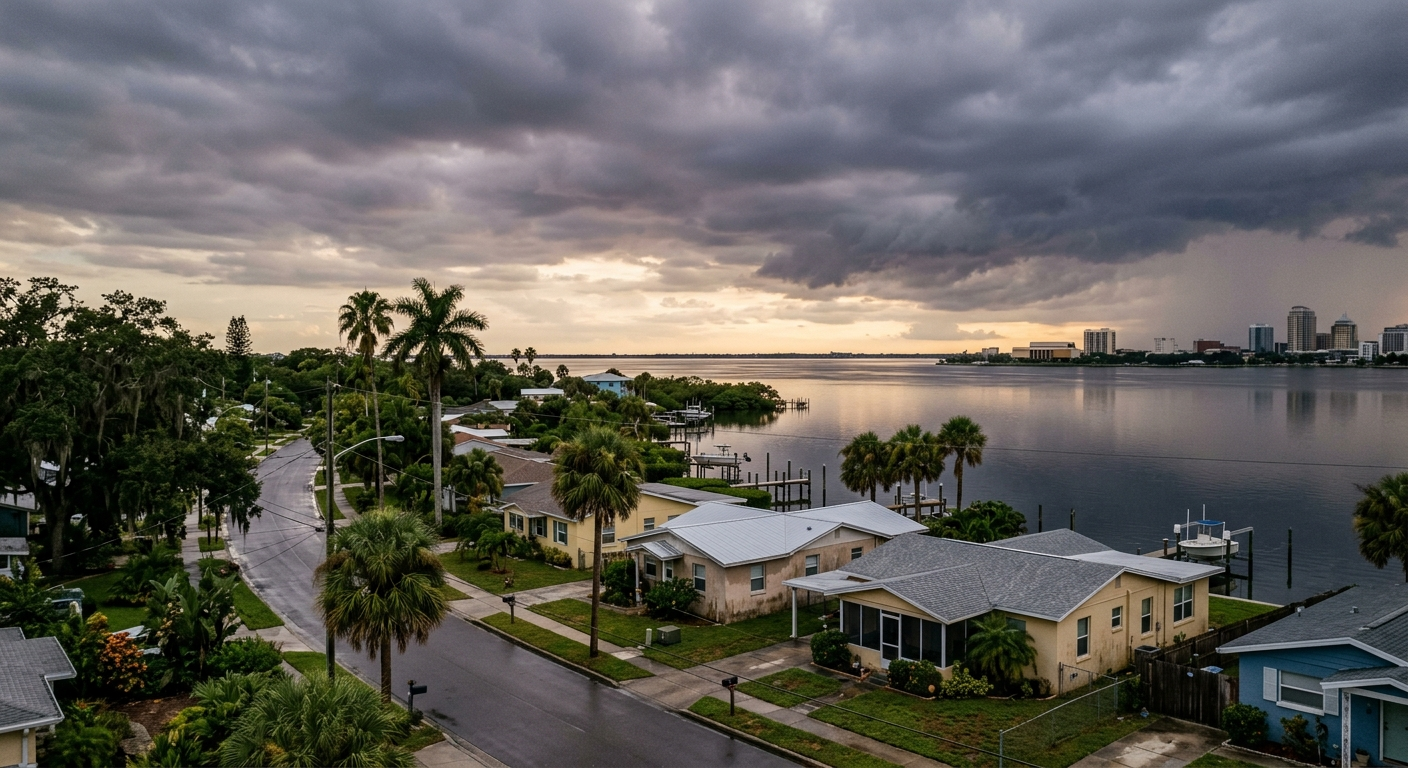
From May through October, heat becomes intense, afternoon thunderstorms roll in almost daily from June through September, and the Atlantic hurricane season runs from June 1 through November 30. Riding does not stop entirely during this period, but many Tampa Bay riders ride less frequently, and some park the bike altogether during peak storm season.
Your risk changes by season, but it does not disappear. A parked motorcycle in a flood-prone garage during a named storm is still a financial asset that needs protection. Comprehensive coverage costs a fraction of what a storm-damaged bike will cost to repair or replace.
It is also worth noting that some of the busiest riding events in Florida, including Biketoberfest in Daytona and local charity rides throughout the fall, bring significantly more motorcycle traffic to Florida's roads in October and November. Increased traffic volume correlates with increased accident risk, and that is exactly when you want your liability limits to be solid.
Factors that affect your motorcycle insurance rate in Florida
If you are shopping for motorcycle insurance in Florida, understanding the rating factors helps you have a more productive conversation with your agent and avoid surprises on the quote.
- Riding experience and age. Newer riders pay more. Completing a Motorcycle Safety Foundation (MSF) course can earn a discount with many carriers and is worth doing for the safety benefit alone.
- Type of motorcycle. Sport bikes and high-displacement performance motorcycles carry significantly higher rates than cruisers or standard bikes. A 1000cc sport bike ridden by a 22-year-old is one of the highest-risk combinations an insurer will see.
- Annual mileage. If you ride seasonally and can document lower annual mileage, some carriers will factor that into your rate. Be accurate when you report it, because misrepresenting mileage can affect a claim.
- Your driving record. Traffic violations and at-fault accidents raise your motorcycle premium, just as they raise your car insurance premium.
- Garaging location. Where the bike is stored and ridden matters. Urban areas with higher theft rates carry higher comprehensive premiums. Pinellas County and Hillsborough County both have theft statistics that insurers track carefully.
- Coverage history. Continuous coverage without gaps results in better rates. Even a short lapse can push you into a substandard market.
For riders also looking at ways to manage their overall auto insurance costs, the same principles that apply to car coverage often apply here. You can read more in our post on five ways to lower your auto insurance premium, where several of the strategies cross over to motorcycle coverage.
Common mistakes Florida motorcycle riders make with their insurance
A few patterns come up repeatedly when riders end up underinsured after an accident or loss.
- Waiving UM coverage to save money. Florida requires insurers to offer UM coverage but allows policyholders to waive it in writing. Many riders waive it without fully understanding what they are giving up. On a motorcycle, that can be a very expensive decision.
- Assuming homeowners insurance covers the bike in the garage. It does not, at least not for collision or mechanical damage. A homeowners policy might cover a motorcycle for certain perils under personal property, but the coverage is limited and collision is excluded. Your motorcycle needs its own policy.
- Carrying no coverage because Florida requires none. Some riders see that Florida has no mandatory minimums for motorcycles and decide to carry nothing. That logic holds fine until the first serious accident.
- Not updating coverage when the bike's value changes. If you bought the bike for $8,000 five years ago and it is now worth $4,500, your coverage limits should reflect that. Overpaying for coverage on a depreciated bike is unnecessary.
- Forgetting to notify the insurer about other riders. If another licensed rider in your household uses the motorcycle, they generally need to be listed on the policy. Unlisted household members can create claim complications.
Get the right motorcycle coverage through Tampa Bay Insurance
Tampa Bay Insurance is an independent insurance agency, which means we shop your motorcycle coverage across multiple carriers to find the policy that fits how you actually ride, not a one-size-fits-all quote from a single company. Whether you ride year-round through Hillsborough and Pinellas County or only pull the bike out when the weather is perfect from November through April, we can build a coverage structure that protects you without charging for what you do not need.
We work with riders across Tampa, St. Petersburg, Clearwater, Largo, Dunedin, and the surrounding Tampa Bay area, and we know the local weather risks, road conditions, and insurance market well enough to give you a real recommendation, not just a generic quote.
To get started, visit our motorcycle insurance page or head straight to our quote request page and we will get back to you quickly. You can also call us directly at (727) 372-5559 . Riding season in Tampa Bay never fully stops, and neither should your coverage.
Get A Quote
At Tampa Bay Insurance, securing your future is easy. Ready to protect what matters? Contact us for a quick quote and personalized insurance options!
Kelly
Speak to Kelly 24/7
Microphone ready
Start your custom insurance quote
Instant answers to your insurance questions
Schedule appointments or follow-ups
Personal Insurance
From auto and homeowners to renters and umbrella policies, we help protect your family and property. Let’s find coverage that fits your life.
Commercial Insurance
We customize policies for your industry's risks, like general liability and workers' comp, ensuring you can run your business worry-free.
Contact Tampa Bay Insurance
Recent Posts